So, what exactly is Feng Shui?
In ancient China the art of Feng Shui existed to create a harmonious environment that was in tune with nature. Feng Shui literally translates as "wind and water". The Chinese sages who thought up the art of Feng Shui believed that its correct usage would promote health, happiness and a sense of well being with the world. All sounds good, right? The art of practicing Feng Shui has now spread all over the world and many people find its use brings to them spiritual well being and harmony. I'll let you decide for yourself!
There is a misconception that a Feng Shui garden should be an oriental garden but this is not necessarily the case. In our western gardens it is possible to practice Feng Shui without sacrificing our native plants and design ideas.
How do we use Feng Shui when designing a garden?
In order to understand how Feng Shui works it is important to study the ancient Chinese religion of Taoism. Taoism claims that everything in the universe revolves around a cosmic life force called Chi. Feng Shui teaches you to regulate and guide this energy force in order to create a beneficial environment. Feng Shui is not only used for gardens but can be practiced in any element of our lives; it is common for workplaces to be designed around Feng Shui.
The cosmic energy of Chi, is divided into two parts which are referred to as Yin (female side) and Yang (male side). They can be further divided and classified as listed in the table below.
 The Taoist belief is that everything in the world consists of different levels of Yin and Yang. You will no doubt be familiar with the symbol for Yin and Yang, which has
  interlocking shapes, one white, one black. Inside each shape is a circle of the opposite colour. This represents that Yin and Yang are not opposites but complementary forces that should be balanced by each other at all times.
Feng Shui involves creating a balance of the Chi that moves through the garden and home. It is believed that this Chi (energy force) enters the garden, then flows around it before leaving again. The trick to practicing good Feng Shui is to have the Chi energy pass around the garden at the correct speed - not too fast or too slow. If it moves too fast it will create disharmony, if it is too slow it could stagnate. You will need to identify where the Chi enters your garden from and make it move steadily through the space. You can regulate the movement of Chi by using certain shapes, colours, sounds and movements.
Okay, with me so far? I know it sounds a bit technical but mostly you will do this by "gut instinct" and common sense.
The Chinese gave the four main points of the compass animal symbols. Each point or animal represents a different type of Chi, containing both positive and negative aspects. Once you have established which direction the Chi is coming from you will be able to recognise what type of Chi it is.
North - Black Tortoise
Chi is heavy, sleepy, caring and protective
South - Red Phoenix
Chi is happy, lucky, bright and full of energy
East - Green Dragon
Chi is kind, wise and encourages growth
West - White Tiger
Chi is unpredictable ad dangerous
The intermediary compass points such as southwest and northeast combine the negative and positive aspects from the four compass points.
Chi doesn't just enter the garden in one place. (Hey, life's not that easy!) It enters from many aspects - through gaps in fences and hedges, over walls and through gateways. The size of the openings will determine how and at what speed the Chi will enter. Then, depending on whether it is positive or negative Chi, the speed and movement can be regulated accordingly. A simple change to the boundary, making it taller, shorter, thicker or thinner can have an immediate affect on how the Chi moves. Once you have got the Chi in to your garden you will still need to regulate its flow around the space.
To decide how to regulate the Chi, you will need to understand how the direction that your garden faces affects certain areas of your life and how to alter them using the different zones and levels of Chi. Talking gobbledy-gook! Let me try to explain...
To establish which area of your garden effects which area of your life, you can use a Bagua; an eight sided table. each side has a category that relates to an element and a number of colours. Study the diagram of the Bagua below.
 The different categories are as follows:
Career or Journey - This is the journey of life and it encompasses all of the things that happen on that journey including one's career. The colours are Black and Dark Blue and the element is Water.
Relationships - This covers all types of relationships including friends, partners and work colleagues. The colour for this area is Pink and the element is Earth.
Elder or Family - This is an area associated with family and relatives including your ancestors. The colour is Green and the element is Wood.
Wealth - This not only includes the financial side of life but also life's riches, which can mean anything of value and importance. The colours are Blue and Purple and the element is Wood.
Helpful People - Helpful people can be anyone or anything of benefit. The colours are White and Silver and the element is Metal.
Creative or Offspring - This represents Children, projects or anything that has been created during life. The colours are White and Silver and the element is Metal.
Knowledge and Fame - This represents all of the accomplishments in life. The colour is Red and the element is Fire.
Tai Chi - this is positioned at the centre of the Bagua, and is the area which allows the Chi energy to move around freely through all other areas. It is also a place where the Chi can return to and become rejuvenated before moving on.
Use the Bagua as a template and lay it over your garden plan, lining up the main entrance of the garden with the career or journey category. You can then establish where each of the categories lie in your garden and can begin to assess the balance of Chi in each of those areas.
Once you have assessed each area you will need to decide how to maintain or improve the movement of Chi through each of those areas. The Chinese use remedies known as the Eight Enhancements (They really do like the number 8!)
The Eight Enhancements are as follows:
Light - Chi flows better when there is light (natural or artificial). You can create more light by introducing pools, streams or mirrors. Creating larger gaps in boundaries in particular areas can help bring more light in (can a gate be added instead of a solid wall?).
Sound - if you have an area where the Chi could build up and stagnate you can disperse it by using sound. Windchimes, wildlife, water and rustling leaves all help to produce sound. Choose plants that will be particularly noisy - bamboo is a good one!
Colour - affects the speed of the flow of chi. Using bright, strong colours will make it faster whilst softer, more subdued colours will slow it down. You can enhance this effect by linking the area to the colour theme of that category on the Bagua.
Life - encourages Chi into corners which it may otherwise have difficulty entering. Add birdbaths or feeders to encourage wildlife into those areas or choose some plants that create movement.
Movement - deflects or disperses Chi. Add features with moving water and plants that will move in the breeze. Anything that will create movement of its own (windchimes, wildife) will work to create prevent a build up of Chi.
Stillness - it may be necessary to slow Chi down and create some stillness in a space. A focal point such as a statue or large plant will help to achieve this.
Functional device - encourages movement of Chi if it is slow or stagnating. This includes using items that provide movement (windchimes etc) or practical items such as taps, pumps and anything else that is functional.
Straight lines - are used, as you might expect, to encourage the Chi to move faster. Paths, pergolas, arches and straight stemmed plants will all help to speed it up.
As I mentioned before some of the design process relies on common sense.
You shouldn't place a bonfire in the wealth section of your garden as this would represent burning all of your money! However, positioning water that contains fish in the wealth area may prove beneficial as the Chinese believe that fish are associated with money.
Those are the main considerations for designing a garden using Feng Shui. There are a lot more associated elements that will help establish a better design and I may return at a later date to discuss more. However, the basics explained here should give you a good footing to begin the process of Feng shui-ing your garden.


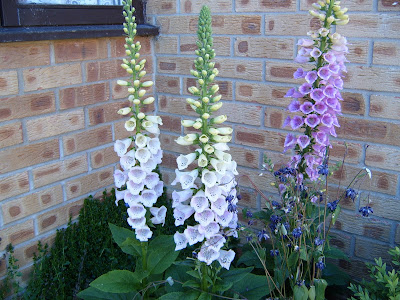 Sprinkling packets of wildflower or specific "cottage flower" seeds will help you achieve the look quite easily but you will restrict your control on the overall planting design. You can allow plants to "pop" up anywhere, and often it is preferable to have plants growing in between cracks in walls and paths. Take care that the garden has interest during the winter months though as most plants that suit this theme tend to be Spring/Summer flowering. Country or "Cottage Style" gardens are also harder to maintain, despite the helping hand that nature lends. If left unchecked, plants could self-seed in far too many places and take over.
  Most people want to include water in one way or another to their garden, and as I said yesterday, it is an excellent way to encourage wildlife to your garden. Why not take it one stage further though, and create the whole garden design based on water? You could use water by having separate water features throughout the garden, or by having it link different elements of your garden together. I'll look at different water types of water features at a later time but take time to think "outside the box" when considering how to use water. Try coming up with some novel and innovative ways to incorporate it into your design.


 Posts
Posts

