Showing posts with label garden design. Show all posts

Monday, 25 August 2008

How to Feng Shui your garden

Time to Feng Shui your garden!

So, what exactly is Feng Shui?

In ancient China the art of Feng Shui existed to create a harmonious environment that was in tune with nature. Feng Shui literally translates as "wind and water". The Chinese sages who thought up the art of Feng Shui believed that its correct usage would promote health, happiness and a sense of well being with the world. All sounds good, right? The art of practicing Feng Shui has now spread all over the world and many people find its use brings to them spiritual well being and harmony. I'll let you decide for yourself!

There is a misconception that a Feng Shui garden should be an oriental garden but this is not necessarily the case. In our western gardens it is possible to practice Feng Shui without sacrificing our native plants and design ideas.

How do we use Feng Shui when designing a garden?

In order to understand how Feng Shui works it is important to study the ancient Chinese religion of Taoism. Taoism claims that everything in the universe revolves around a cosmic life force called Chi. Feng Shui teaches you to regulate and guide this energy force in order to create a beneficial environment. Feng Shui is not only used for gardens but can be practiced in any element of our lives; it is common for workplaces to be designed around Feng Shui.

The cosmic energy of Chi, is divided into two parts which are referred to as Yin (female side) and Yang (male side). They can be further divided and classified as listed in the table below.
The Taoist belief is that everything in the world consists of different levels of Yin and Yang. You will no doubt be familiar with the symbol for Yin and Yang, which has interlocking shapes, one white, one black. Inside each shape is a circle of the opposite colour. This represents that Yin and Yang are not opposites but complementary forces that should be balanced by each other at all times.

Feng Shui involves creating a balance of the Chi that moves through the garden and home. It is believed that this Chi (energy force) enters the garden, then flows around it before leaving again. The trick to practicing good Feng Shui is to have the Chi energy pass around the garden at the correct speed - not too fast or too slow. If it moves too fast it will create disharmony, if it is too slow it could stagnate. You will need to identify where the Chi enters your garden from and make it move steadily through the space. You can regulate the movement of Chi by using certain shapes, colours, sounds and movements.

Okay, with me so far? I know it sounds a bit technical but mostly you will do this by "gut instinct" and common sense.

The Chinese gave the four main points of the compass animal symbols. Each point or animal represents a different type of Chi, containing both positive and negative aspects. Once you have established which direction the Chi is coming from you will be able to recognise what type of Chi it is.

North - Black Tortoise
Chi is heavy, sleepy, caring and protective

South - Red Phoenix
Chi is happy, lucky, bright and full of energy

East - Green Dragon
Chi is kind, wise and encourages growth

West - White Tiger
Chi is unpredictable ad dangerous

The intermediary compass points such as southwest and northeast combine the negative and positive aspects from the four compass points.

Chi doesn't just enter the garden in one place. (Hey, life's not that easy!) It enters from many aspects - through gaps in fences and hedges, over walls and through gateways. The size of the openings will determine how and at what speed the Chi will enter. Then, depending on whether it is positive or negative Chi, the speed and movement can be regulated accordingly. A simple change to the boundary, making it taller, shorter, thicker or thinner can have an immediate affect on how the Chi moves. Once you have got the Chi in to your garden you will still need to regulate its flow around the space.

To decide how to regulate the Chi, you will need to understand how the direction that your garden faces affects certain areas of your life and how to alter them using the different zones and levels of Chi. Talking gobbledy-gook! Let me try to explain...

To establish which area of your garden effects which area of your life, you can use a Bagua; an eight sided table. each side has a category that relates to an element and a number of colours. Study the diagram of the Bagua below.
The different categories are as follows:

Career or Journey - This is the journey of life and it encompasses all of the things that happen on that journey including one's career. The colours are Black and Dark Blue and the element is Water.

Relationships - This covers all types of relationships including friends, partners and work colleagues. The colour for this area is Pink and the element is Earth.

Elder or Family - This is an area associated with family and relatives including your ancestors. The colour is Green and the element is Wood.

Wealth - This not only includes the financial side of life but also life's riches, which can mean anything of value and importance. The colours are Blue and Purple and the element is Wood.

Helpful People - Helpful people can be anyone or anything of benefit. The colours are White and Silver and the element is Metal.

Creative or Offspring - This represents Children, projects or anything that has been created during life. The colours are White and Silver and the element is Metal.

Knowledge and Fame - This represents all of the accomplishments in life. The colour is Red and the element is Fire.

Tai Chi - this is positioned at the centre of the Bagua, and is the area which allows the Chi energy to move around freely through all other areas. It is also a place where the Chi can return to and become rejuvenated before moving on.

Use the Bagua as a template and lay it over your garden plan, lining up the main entrance of the garden with the career or journey category. You can then establish where each of the categories lie in your garden and can begin to assess the balance of Chi in each of those areas.

Once you have assessed each area you will need to decide how to maintain or improve the movement of Chi through each of those areas. The Chinese use remedies known as the Eight Enhancements (They really do like the number 8!)

The Eight Enhancements are as follows:

Light - Chi flows better when there is light (natural or artificial). You can create more light by introducing pools, streams or mirrors. Creating larger gaps in boundaries in particular areas can help bring more light in (can a gate be added instead of a solid wall?).

Sound - if you have an area where the Chi could build up and stagnate you can disperse it by using sound. Windchimes, wildlife, water and rustling leaves all help to produce sound. Choose plants that will be particularly noisy - bamboo is a good one!

Colour - affects the speed of the flow of chi. Using bright, strong colours will make it faster whilst softer, more subdued colours will slow it down. You can enhance this effect by linking the area to the colour theme of that category on the Bagua.

Life - encourages Chi into corners which it may otherwise have difficulty entering. Add birdbaths or feeders to encourage wildlife into those areas or choose some plants that create movement.

Movement - deflects or disperses Chi. Add features with moving water and plants that will move in the breeze. Anything that will create movement of its own (windchimes, wildife) will work to create prevent a build up of Chi.

Stillness - it may be necessary to slow Chi down and create some stillness in a space. A focal point such as a statue or large plant will help to achieve this.

Functional device - encourages movement of Chi if it is slow or stagnating. This includes using items that provide movement (windchimes etc) or practical items such as taps, pumps and anything else that is functional.

Straight lines - are used, as you might expect, to encourage the Chi to move faster. Paths, pergolas, arches and straight stemmed plants will all help to speed it up.
As I mentioned before some of the design process relies on common sense.
You shouldn't place a bonfire in the wealth section of your garden as this would represent burning all of your money! However, positioning water that contains fish in the wealth area may prove beneficial as the Chinese believe that fish are associated with money.

Those are the main considerations for designing a garden using Feng Shui. There are a lot more associated elements that will help establish a better design and I may return at a later date to discuss more. However, the basics explained here should give you a good footing to begin the process of Feng shui-ing your garden.




Thursday, 21 August 2008

More Styles and themes to consider for your Garden Design

So, we've looked at quite a few themes that you might like to take inspiration from.

But Wait...There's More...

Well, in fact, the list is probably infinite as there will always be new themes, styles and fashions that can be used to inspire design. However, let's just look at some of the more common themes related to garden design?

If you're craving for a retreat in the country that you can escape to at weekends, then why not consider creating a country garden where you currently live? Country or "cottage style" gardens have a more relaxed and informal feel to them and convey a more romantic image (possibly not a good look for rugged bachelor types but it's up to you!). To achieve a cottage style look, you will need to focus primarily on the planting, opting for softer, muted colours that are fragranced. Note: They don't all need to smell or you'll start to feel very nauseous very quickly!
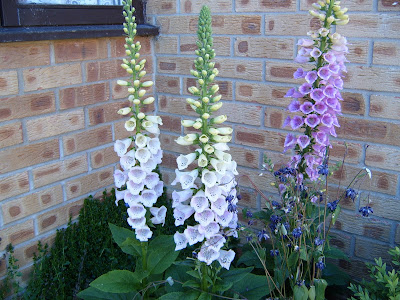
The beauty with a cottage style design is that you don't have to worry too much about plant placement - nature will help you out here. Plants are usually placed randomly in a dotted arrangement and are encouraged to self-seed freely. Good plants to use are campanulas (picture above) digitalis (foxgloves -pictured below), Hollyhocks (Alcea) and rambling roses.
Sprinkling packets of wildflower or specific "cottage flower" seeds will help you achieve the look quite easily but you will restrict your control on the overall planting design. You can allow plants to "pop" up anywhere, and often it is preferable to have plants growing in between cracks in walls and paths. Take care that the garden has interest during the winter months though as most plants that suit this theme tend to be Spring/Summer flowering. Country or "Cottage Style" gardens are also harder to maintain, despite the helping hand that nature lends. If left unchecked, plants could self-seed in far too many places and take over. Don't be afraid to remove plants that are unwelcome - you could always take them to a local plant sale and make money from them!

If it's the sea you dream of (or if you already live by the sea) then maybe a coastal garden is the way forward for you. Coastal gardens have very specific needs due to their harsh environment - strong sea breezes carrying sand can have a very damaging effect on plants. Opt for plants that have adapted themselves to tolerate the salty sea air, winds and sand blasting. On the plus side of living in a coastal region, there is rarely a frost and so, given the right wind protection, you can grow tender plants. Take a walk around coastal regions and, without snooping, take note of the plants that seem to be thriving in peoples gardens. These will help you to decide which plants you could use. Some suggested plants are Sea Buckthorn (Hippophae rhamnoides), Escallonia (Escallonia 'Apple Blossom'), Red Hot Poker (Kniphofia 'Atlanta'), Oriental Poppy (Papaver orientale). Visit garden centres and nurseries that are near coasts to see what they advise.

Don't just consider the plants for coastal gardens. Think to about the hard landscaping materials you could use. Crushed shells and pebbles spring to mind (please don't take anything from the beaches though as that is illegal!). Visit old boat yards and see if they have any old bits of wood, rope or chain that you could have and incorporate into your design.

The next theme that links nicely to coastal themes is water. Most people want to include water in one way or another to their garden, and as I said yesterday, it is an excellent way to encourage wildlife to your garden. Why not take it one stage further though, and create the whole garden design based on water? You could use water by having separate water features throughout the garden, or by having it link different elements of your garden together. I'll look at different water types of water features at a later time but take time to think "outside the box" when considering how to use water. Try coming up with some novel and innovative ways to incorporate it into your design.

As the climate changes, Britain is experiencing milder winters and wetter Summers. As a result of this, we are now able to grow a wider selection of plants and can quite successfully grow more sub-tropical plants in our gardens. It is possible to create and exotic, jungle feel to sheltered areas in gardens by using large-scale plants with dramatic foliage. There are now many specialist nurseries that sell sub-tropical plants. however. just by visiting your local "normal" garden centre, you'll find a huge range there too. The success of a sub-tropical garden is largely contributed to by the combination that you create with different textures and structural plant forms. Being predominantly green, you cannot rely too much on showy flower displays. I have a stunning Zantedeschia in my garden that provides flowers to my otherwise evrgreen display (see picture). Combining the large leaves (often 2metres plus in length) of Musa basjoo (Banana) with the fine delicate leaves of Dicksonia atlantica (Australian Tree Fern) and the sleek black stems of Phyllostachys nigra (Black Stemmed Bamboo) creates an instant 'jungle' atmosphere. I love the look that I get with my Gunnera (see picture), although planting it under my washing line wasn't one of my better ideas, as each leaf is over 1 metre wide! Materials such as bamboo, rocks, gravel and water contribute to the style well.

Tropical planting works well in a city environment where it can benefit from the warmth and suits a contemporary design. It also works well in a colonial styled garden that incorporates "outdoor living" as its main function.

Colonial gardens are becoming increasingly popular as we strive to create lifestyles that are more focused on enjoyment and entertainment rather than work, work,work! The colonial style adapts the Australian outback or new England way of life and adds accessories such as hammocks, hot-tubs, decking and more unusual garden furniture to the mix. Predominantly built with timber the colonial style can feel quite formal. That is where tropical planting can come in useful, by softening the look and making the garden feel more relaxed. For a more realistic colonial feel, opt for subdued colour tones of whites,greys and bleached out neutral tones if you want a New England feel. Or, to get the Australian look (I feel I'm on a make up advert now!) opt for richer hues of orange-browns with cream and dark green.

A style that was quite popular during recent years is oriental; Chinese and Japanese gardens. The key to a successful oriental garden is to remember the phrase "Less is More". All too often these gardens can fail miserably in their design as they are overdone and contain too many elements.

Scale and Balance are paramount in these gardens. Designed around the theme of nature, you are trying to recreate a landscape in miniature. They rely heavily on symbolism where rocks represent mountains, raked gravel represents the sea and small trees represent their larger counterparts. Often, stone lanterns or water spouts are positioned throughout the landscape to provide sanctuary, tranquility, and a place for meditation.

Bamboo is widely used in oriental garden both as the plant and as canes to make fences, bridges and furniture. Gravel also features heavily. Typical Japanese planting would feature mosses, ferns, bamboos, Acers, Grasses and ornamental Cherries. Again, garden centres can offer you a wide variety of plants suitable for oriental themed gardens. I'll look at oriental gardens again another time and focus on how to create a garden using Feng shui.

If space is a problem for you then you may prefer to consider a container garden. This is not as dull as you might imagine as almost anything can grow in a container so long as it is well nourished and cared for and has enough space to grow. Choose pots that will compliment your chosen garden theme. For example; terracotta pots work well for a Mediterranean garden.

Growing plants in pots is a good way of introducing plants to your garden that normally would not tolerate the soil conditions. You are totally in control of plants growing in containers as they have to rely on you for all of their needs. It's like having a (or another) child!

Speaking of children! You may want to create a garden specifically with children in mind. If this is the case then everything you design will have to be influenced by two things - safety and fun! Consider whether you actually need water. Despite it being fun, even shallow water is potentially dangerous for small children. If you are going to provide play equipment, make sure that the surrounding surfaces are suitable (concrete is not recommended!). It is advisable to position a play area so that it will be in view of adults. Hiding it at the back of the garden may seem tempting but if you cannot watch the children playing from a window of the house or a patio then it could potentially be dangerous. Get the children to join in with the design process. They might have some fun and wacky ideas that you hadn't thought of.

Although most children won't be bothered about the plants that you use, make sure you choose non-toxic plants and try to include "touchy-feely" plants.

Remember, whichever theme, or themes, you decide to use, they must fit in with the overall feel of the house and it's surroundings.

Wednesday, 20 August 2008

More Garden Design Themes and Styles Ideas

Fancy yourself as a bit of an

aristocrat?

Why not take inspiration from early Greek and roman architecture and create yourself a classic garden?

During the 18th century is was the fashion for well educated young gentlemen to explore Europe, where they learned about the classics, soaked up the culture and returned home with ideas and artifacts. These ideas and artifacts were used in many gardens in Britain including Chiswick House.


Some of the great classical gardens in Italy still exist today and are a good source of inspiration. They are very structured and formal, with evergreen hedges of box and yew providing that structure. Statues and references to classical architecture are featured prominently within the gardens including follies, bridges, and temples. Framed views and vistas that are still used today in many gardens would have originated from the classical era.

If you have been thinking that you would prefer a formal garden in design, then perhaps you might like to take it one stage further and add some classical inspiration to the design. Balustrades, columns and arches can all be reproduced and should be of high quality if you plan to use them in your garden.

Whilst looking at historical themes for gardens, you may decide that you would like a garden that keeps to the traditional of the period your house was built in. in this case you will need to research the period to be sure that you represent the history accurately. The Royal Horticultural Society Library would be a good source of information about historical periods in gardening. Don't forget to consider the planting and materials that were used during that time as well as the styles.

You do not need to design the whole garden with a particular theme in mind. You could if you prefer, design a modern garden which is personal to you, but take inspiration from themes and styles that you like.

In more recent times (after Second World War) there has been a slow emergence of more contemporary designs for gardens. This has been more evident in Europe and North America, however, us Brits are beginning to catch up now!

Contemporary, modern designs work best if the building that it is being linked to is also contemporary and modern. It then becomes easy to form a relationship between the garden and the building by using the same materials such as steel and glass.

People now take a lot of inspiration from their house interiors and with the availability of many more colours of exterior paints it is possible to create "that extra room" outside. Designers trying to create a contemporary design tend to shy away from traditional garden statues and ornaments and are opting instead for trendy glass and metal sculptures and modern artwork.

There's no reason why you
should be the same.

If you want a statue of "Adam" in your modern garden then go for it - perhaps you can paint him a different colour or something! During the "Ground Force" days, it was popular to use decking, and just about everyone who could afford to do it, did it! Thankfully though the trend died down when Alan Titchmarsh quit the show. Now you have the option of choosing a material for your patio that isn't made of wood, and you'll not be considered unfashionable. Of course decking is still popular, so if you like it, use it.

As our climate has changed so have our modern requirements for our gardens. We now have to consider water management and using drought tolerant plants because of the unpredictability of the British summers. The types of plants that we can successfully grow in our gardens is also changing and a result people can create little tropical jungles in their own gardens.

The latest trend to hit our gardens is to "grow your own" vegetables. This is a fairly new trend that has been gradually increasing during the last couple of years, however, I believe that with the present economical climate, the need to be able to grow your own vegetables is going to rapidly increase now. Unlike during war days, when people gave over their entire gardens to grow crops, this time around we are incorporating the vegetable crops into our normal planting and combining the two types of planting. If you visit any garden shows you will notice the number of display gardens that feature growing ornamental and edible plants together.

Another big trend at the moment is encouraging wildlife into your gardens. Choosing plants that encourage bees, butterflies and other wildlife can be enjoyable for children and adult alike as they strive for a bit of "nature" in their hectic urban lives. Increased sales of bird feeders in recent years have seen an increase in birds visiting gardens. I tried this for the first time earlier this year and whilst I did get an increase in bird life, I also gained a squirrel that scurries along from nearby trees and helps himself (or maybe herself) to my peanuts.

Although some people may find having a squirrel a nuisance, I quite like my little visitor - he's (she's) good fun to watch!

Some people are opting to allow a section of their garden to grow "wild" including nettles and wildflowers to encourage wildlife. This can look good in the right setting but care will need to be given to it to ensure that it doesn't grow out of control and take over the rest of the garden.

Another easy way to attract wildlife is to add water to your garden. You don't need to have a huge pond with a waterfall, any water will have the desired effect. I added a half cask barrel and filled it with water. I put in a few plants and now every summer I have frogs hopping around. It's nice but they make me jump every time they move! If you're wanting to keep fish then you would need to install an adequate pool for them to ensure their health. Talk to your local supplier to gain advice from them before you make any decisions.

When considering themes and styles for your garden look everywhere for inspiration. Yes, study the countryside and other gardens, but also look elsewhere. Reading interior design magazines or going to places that have nothing to do with gardens could lead you to your big idea.

Tuesday, 19 August 2008

How to create Formal and Informal Garden designs

How are the rough design layouts coming along? Don't worry, I'm not expecting you to have finished them already. This is (yet another) important stage so take as long a time as you need to do them justice. This is my favourite part of the design process because you can just "go for it" and see what happens.

Anyway, I thought I'd give you a heads up on some of the different themes and styles that you can focus your garden design on. As there are quite a few to mention, I'll go through them over the next couple of days so that you can have time to consider them all properly. The list is by no means exhaustive and you may already have your own theme that you want to explore. That's good - keep going with it!

For everyone else, here are a few to whet your appetites and get those creative juices flowing even more!

Formal Gardens


Formal gardens are generally created using a combination of geometric shapes and straight lines. They can be symmetrical or asymmetrical.

Formal gardens have a sense of order and appear to be straightforward and logical. (note the word "appear"!) This is particularly evident if the design is symmetrical. Formal gardens have a controlling effect on its visitors, directing them to follow certain paths. French formal gardens such as Versailles rely on strong ground pattern and structural hedging to provide their distinctive shape. These formal gardens are arranged around an axis, or a series of axes and they incorporate framed views or focal points.

Asymmetrical formal gardens are generally more interesting, intriguing and unpredictable. Getting the balance right in an asymmetrical garden is the key to their success, using areas of "mass" and "void", and the size and shape of the different areas to counterbalance each other.

Typically formal gardens use evergreen plants such as topiary and clipped hedges as the primary planting. The structure and architecture of the plants contributing to the overall formality of the design.

Informal Gardens


In the 18th century Britain rebelled against the rigidity of formal garden design and began to create more informal gardens, reflecting the surrounding landscapes and opening up the boundaries using curvaceous lines and soft contours. Back then they created open spaces within their boundaries and encouraged livestock to graze. Now I'm not suggesting you borrow the local farmers sheep here, but you get the gist of an informal garden - keep it simple and free-flowing.

The informal garden has a natural, wilder feel and there are no limitations in its design. It has a more relaxed feel than a formally designed garden and encourages visitors to roam freely around it. Informal gardens can link very nicely to surrounding countryside or they provide a sanctuary in town environments.

Informal gardens work best when loose materials are used such as gravel that easily form free- flowing shapes and curves. Harder landscaping materials such as paving can be used in an informal setting but will need to be positioned in an informal manner.

Planting in an informal garden should also be relaxed, and they should be encouraged to flow over paths to "soften" the design. They can also be planted in drifts rather than tight blocks allowing them to merge together. It's all about creating soft lines in an informal garden, so throw out your rulers for this design! Avoid using rigid, architectural plants such as the topiary and clipped hedges from the formal designs. Instead opt for less rigid plants, and allow shrubs to have the space to grow to their natural shapes and sizes. Bamboos and grasses are perfect for an informal garden as they create movement and generally have soft forms.

Informal gardens tend to require a higher amount of maintenance than a formal one, so you will need to consider how much time you can devote to looking after your creation. It may be that you have your heart set on an informal design but cannot devote much time to it. In this case you will need to be very careful with your selection of plants so as to create an informal look but with minimum maintenance requirements.

If you want to include water to your design then make it "fit" with your chosen design. Creating a rigid, square water feature raised with bricks would be inappropriate for an informal design. the design would need to reflect nature as much as possible, copying the size and shapes of streams, ponds, lakes and rivers in exact proportions.

Take a look at how nature creates its gardens. Head off into the countryside the next sunny day you have available and study the contours of the land, how the streams curve and how the plants grow. This will give you a greater understanding of how nature works and help you create a great informal design.

You can, of course, combine the two themes together if your garden has enough room to accommodate them both. You may decide that close to the house requires a formal setting whilst as you move to the further boundaries you can allow for a more informal, relaxed design. The choice is, as always, totally yours.

Monday, 18 August 2008

How to form Shapes and Patterns in your Garden Design

Time to learn more about how to design your perfect garden.

You have now completed you functional layout plan and taken into consideration the principles of design that I covered last week. (Check my archives for this information)

Now, you need to begin the

design layout!

Don't worry, as before, we'll take it one step at a time and look at tips to make the process easier. It would not work well to just draw any old shapes and patterns on to your design and hope for the best! You have to decide the best logical decisions to ensure that your plan will look good. This can be made easier by using tools such as geometry and grids to assist us.

The most important thing to remember is that designing your garden isn't about drawing pretty patterns. You are, after all, a designer, and not a decorator! Having said that though, there is a place for patterns in your plan as they can help to form an intrinsic part of the design. Totally confused? Patterns can create mood, direct movement, and even help to alter the perceptions of the space.

You need to decide which shapes are going to form your design and how you are going to compose. You don't need to pluck these shapes from thin air. Refer back to all of the information that you have collated so far and search for clues. If your design brief stated that the garden would be formal then this would suggest using solid shapes such as squares and rectangles. They would also need to be set out in a symmetrical pattern to emphasise the formal theme. On your functional layout plan, you have already decided where some of your shapes need to be located within the space and so use these as your guide. You may need to juggle a few shapes to permit them to sit better in your design. This is normal and shows that you are allowing the design to change and develop as your thoughts and ideas become clearer.

Not certain that your shapes and patterns look right in your plan? Not a problem. Think back to your principles of garden design: unity and harmony, scale and proportion, and balance. These principles should be applied to the process of positioning shapes and patterns. Try to relax and let your sense of imagination have a slightly higher say than sensibility. You don't have to get it right first time. Just keep experimenting until you get something you feel happy with.

Okay, so you've looked through all of your work so far and you've still no idea what direction to take your design in and indeed no idea what blimin' "shapes" to use! Take a step back from your garden design and think more about the composition of shapes in general. Get yourself some fresh paper and draw the outline to your garden on to it. Then, draw yourself some different sized shapes on separate paper and cut these out. Now, within your garden boundaries, place your shapes in different ways and see what looks good to you. This could help you to reach some decisions about your design.

Consider each shape individually and then look at how the shapes relate to each other. You will need to analyse each shape to fully understand how it can be used to most effect within your garden.

The Circle is a strong. formal and simple shape that occurs in nature. It has symbolic meanings in many religions and cultures, such as in China where it represents heaven and forms the basis of the Tai Chi symbol of Yin and Yang.

The circle is made up of a centre, a circumference, a radius and a diameter. We can also extend the radius out from the centre of the circle, beyond its circumference. A tangent can be created by placing a line outside the circle that touches the circumference and forms a right angle with the radius line. (See diagram) To join any shapes to a circle it is important to link these new shapes with one of the lines we have identified. If you do not use these lines then the design will look unbalanced and awkward.

The Square is also a formal shape. It is a man-made shape with rigid sides and axes that pass through it. It is composed of a centre, sides, axes and a diagonal. Lines from the sides and axes can be extended beyond the outline of the shape to help formulate and create adjacent shapes. The axes can be used to divide the square into smaller squares or rectangles. A rectangle can be formed by extending one side of the square.

Similar shapes are relatively easy to combine as they generally fit together fairly easily. if you want to combine different shapes, then just remember to join them using their different component lines and they should fit together in a more pleasing composition.

When combining shapes prevent yourself from placing them in such a composition that you create acute angles (less than 45*). This will be very difficult to actually landscape and will look weak . Creating acute angles normally arises when combining circles to other shapes. Whichever shapes you are combining they will need to differ in size to establish a dominant shape. If you fail to do this then the design will lack identity, be dull, and lack focus - sorry!

Circles can be combined in many different ways such as overlapping them or in concentric circles. When overlapping them it is best to make sure the centre of the overlapping circles passes through the circumference of the underlying circle. If there is too little overlap then you could be creating an acute or obtuse angle which may be difficult to deal with, and, once again, will not look right.

Have an experiment with a pair of compasses and see what you can do with circles. Try expanding the radius out of the original circle and drawing a new circumference so that you create a wedge. You can also try drawing circles with in circles and creating the appearance of a cut tree trunk.

Have fun and get to know your shapes!

Time to get a bit more technical with the whole shape thing. You can create a shape using a curvilinear design. A curvilinear design uses the the circumference of circles and ellipses to form the design. Try not to confuse this with natural and free-flowing designs, where you purely draw a shape with your hand and do not use other shapes to create it. To successfully create a curvilinear design, you will need to combine circles so that they are tangent to each other - the fewer, larger circles you use, the simpler and stronger the curvilinear design will be. Curvilinear designs work best in informal garden settings. Take a look at the diagram. You can see how the circumferences of the circles create the curvilinear design.

To combine rectangles is a fairly easy process and you can usually achieve pleasing results without much effort. They are useful for creating formal, symmetrical and asymmetrical designs. Consequently, they are used to link architecture with gardens and are often placed close to the house or building to create patios and terraces. Rectangular shapes do not work so well for informal designs.

To combine them, as with all shapes, use rectangles of different sizes. Try to keep the shapes fairly large and restrict the number used to prevent the design becoming messy and cluttered. There will need to be a hierarchy of sizes, preferably with one larger, dominant rectangle that is surrounded or overlapped by smaller ones. This theme works particularly well in long, narrow gardens.

You can develop the rectangular theme by laying then at angles to the house and creating diagonal themes. if a site is very short and small, using a rectangle at 45* to the house can can take away the emphasis from the closeness of the rear boundary to the house by directing the eye towards its longest axis.

When designing shape combinations it is important not to get too carried away - remember keep it simple.

Okay, so you've got your shapes but how do you position them into your plan? There is a method using grid-lines that can help you to position your shapes and make sure that your shapes are in proportion to the building or house.

The grid system works by taking a measurement from a feature on the house and using this dimension to create a grid square - this grid is then repeated to fill the site. The feature that you use to determine the size of the grid square should be located on your baseline or house facade so that it visually connects and relates to the garden. The theory is that the designer (you) can use this dimension to draw up a grid for use as an underlay, onto which you can then arrange the patterns and shapes that will form the design. The measurements used for the grid will have a direct relationship with the house, and resulting patterns should also therefore be in proportion to the house.

Take a look at this next diagram. The unit of measurement for the grid square has been taken from the french windows. The shaded squares show how you can use the grid to create shapes and patterns for your design. Easy, hey?

The grid-lines don't always work for every designer but have an experiment anyway and see if it works for you. You can also try scaling your grid squares up or down proportionately or, when you feel confident with the method, even rotating the grid 45* to the house.

Whether you decide to use the grid or not, try to link lines from the house or baseline to shapes in your design. This will continue to create a direct relationship with the house and the garden. If there are existing features within the garden that are to remain then these should also link to the new design in a similar way.

Once you have created some interesting shapes for your garden, experiment with them by tracing the overall outline that your shapes have made and considering how they look. It must be a shape that is possible to create in real life.

Remember, I mentioned freehand curves earlier? If you want to create a natural look to your design it is possible to draw curves and shapes freehand although it is somewhat harder. You will have difficulty reproducing your shapes and will have to use the offset method of measuring to ensure accuracy. If you create a garden using this freehand method, then you must make sure that the shapes are bold, natural and not forced. Give me geometrics any day!

When you have got to a stage where you're happy to combine your functional layout plan with your new design layout, use smaller, scaled-down, versions of your site outline and roughly sketch in your proposed design layout. By drawing these rougher sketches it will be less intimidating than drawing onto your larger plan and will hopefully allow you to be more spontaneous with your layout. Make sure that your smaller plans are still in proportion otherwise you'll end up in a right pickle when you try to draw it onto your larger plan.

Wednesday, 13 August 2008

Getting the Balance in your Garden Right - more garden design principles

Okay...so we now have perfect unity and harmony in our well proportioned and simple design!

The other principle that we need to pay attention to is

Balance

A Balanced design will create a garden that is comfortable and visually pleasing. It will unite all of the features and elements within the space and create harmony. You see how all the different principles relate to one another?

To get the balance right, you need to think of how you'd feel in that space - you wouldn't feel very comfortable in a room that had all it's furniture pushed to one side - would you?

The easiest method for achieving balance in your garden would be to design a formal, symmetrical and evenly spread garden. Symmetrical gardens are naturally balanced and so you would not need to concern yourself too much with this particular principle. If you want an informal garden however, this will require a bit more consideration on your part to ensure that you get the balance right.

When dividing up your site (refer back to your functional layout plan here) you should make sure that each area relates to each other area. They do not need to be the exact size and shape - that would be boring- but they need to form some kind of relationship, not just two dimensionally but also three dimensionally. Consider which areas will become your masses (the solid aspects of your design; such as planting, buildings, etc) and which areas will be your voids ( the open areas of your design; such as lawns, patios, pathways, etc).

Use the furniture in the room as an example- all of the masses (furniture) are squished to one side of the room. The masses and voids in this space are not very balanced at all!

Now look at what each area is responsible for. You will have some areas that are to be for sitting and relaxing whilst other areas are for playing or walking. Try to balance out the different uses. The aim is to prevent the garden from becoming too static or active in any one particular section of the garden. If you are including a veg patch don't forget to add a seat to this area. That way you can balance work with sitting and enjoying the fruits of your labour.

Most gardens benefit from having secluded areas which are not immediately visible when entering the garden for the first time. You will need to consider the balance between these secluded areas and the open spaces. The function of each of these areas will dictate that balance to a certain degree - helping you to reach a decision.

Look at the balance you require between light and dark spaces. Too many shady areas will create a gloomy garden, whilst a bright sunny garden will be harsh, and tiresome. A totally sunny garden will also be harder to plant as they will need to be able to tolerate dry, hot conditions all of the time.

Sometimes you won't be able to control the amount of light that your garden receives. If your neighbour has a huge tree that casts a massive shadow over your garden, you'll just have to work with it, I'm afraid. Using light coloured paving materials and flowers can help to reflect any light that does reach that area and make it appear brighter. If, on the other hand,, your garden has no natural shade you will need to address this and add something that will add shade. Whether that would be a tree or a purpose built structure depends on what would fit with your design.

You will need to balance your choice of colours too. Introducing too many colours will make your design feel chaotic, whereas, not enough colour could make the design feel dull and uninteresting.
Take a look at this picture. How does it
make you feel? Is it too much colour or a well balanced design? (This was a design (not mine!) exhibited at Gardener's World Live show and people's views were mixed on the day )


Consider carefully where structures might add to enhance your design, and bring balance to it. Features or structures can help balance a three dimensional element in your garden and ensure that there is something of interest at all levels. When choosing which structures or features you want to use, make sure that they are the correct size and weight for your design - not too flimsy or overpoweringly large.

Remember - everyone's

views and ideas are different.

Just because you are convinced that your design is balanced, someone else may disagree altogether. Don't worry about it! So long as you feel that you have kept to the principles of garden design then you'll be happy with the finished design - and, after all - it is YOUR garden!

Tuesday, 12 August 2008

More Graden design Principles - Keeping your Garden Design Simple and to Scale and Proportion

Think you understand the principle of Unity and Harmony now? Good. Let's look at a few more principles of Garden Design that you'd do well to remember - ooh, that sounds a bit menacing doesn't it? Sorry!!

Heard of the phrase -

"Less is More"?

Well, it applies to Garden Design too. Simplicity in your design will encourage a strong and successful design. Keeping a design simple isn't always easy, as once your creative juices are flowing you can be tempted to keep adding to your design. Knowing when to Stop though can really help you design a fantastic garden - and if you've lots of ideas that you couldn't use, offer to design a friends garden and use them there (so long as they fit with your friends brief!)

So, how do you keep a garden simple?

The easiest way is to keep monitoring your design and ask yourself if it is getting too busy. If there is so much going on that you don't know which way to turn then look at which elements you can do without, and find the courage to remove them. If you're having difficulty deciding whether to remove the sauna or the jacuzzi ask someone who will be using the garden with you what their opinion is. It's not worth spending hours agonising over so be sure to put the dilemma into perspective. Ensure that simplicity runs through your entire design - from the layout to the textures and colours.

One way of keeping a design simple is to use just a few types of plants and mass plant them. (Apologies for the quality of the photo, my camera was playing up!)

If you find you've got hundreds of juicy ideas flowing from you, don't just add them to your design willy-nilly, keep a sketch pad nearby and jot down your ideas there. That way you'll be able to take a step back and develop the best ideas that will work for your brief.

Another principle that is fundamentally important is

Scale and Proportion

You will need to consider three relationships when you think of scale and proportions. Firstly, the relationship between the house and the garden. Secondly, that of the garden and the surrounding landscape. Lastly, don't forget the relationship that you need to have with your garden.

As soon as you begin your design try to think three dimensionally. This will help focus your mind on how elements will relate to each other and hopefully you will see if something will be out of proportion to something else.
Take a photo of a particular feature in your garden that you are planning to keep. Lay tracing paper over it and experiment by drawing different design ideas, seeing how they relate to the original feature in size and proportion. If you're not confident at drawing it doesn't matter, nobody else needs to see your drawings, just keep practicing until you feel more relaxed with your style. If you're really struggling to get your ideas on to paper, then you might want to consider going to a local drawing class to gain experience.

You could even try making a model of your garden. It will need to be to scale so that you can tell if an idea is going to work but it can be made from any discarded items that you can find. Turn yourself into a Blue Peter presenter and do your bit for the environment by recycling old boxes and toilet rolls. Remember you're not trying to re-create the dolls house that you (or a female relative) had when you were young, it's merely another tool to examine the major elements of your design and see if the scale and proportion will work within the boundaries of your garden.

Whichever method you choose, include a correctly scaled person to your sketch or model. That will show you if your idea relates to the people that will be using your garden.

When you come to size up your major elements and feature, think of their practicalities and what you are wanting to use them for. Make sure that a patio planned for seating 12 people is large enough to take 12 people - and a planned Koi pond can accommodate Koi and not just little fish!

Consider also, the type and size of material that you use. Generally a smaller garden will suit having a smaller unit of paving which will give the impression of having more space. If you were to use small units of paving in a larger garden however, it may have the effect of looking too busy. Be careful if you are including steps in your garden. They will need to be the correction proportion to prevent accidents. Make the risers (the vertical bits) as shallow as possible, and the treads (the flat bit of the step) as wide as possible, ensuring that the steps are comfortable to use and safe.

You can use scale and proportion to emphasise and enhance the sense of space within a garden. Make small gardens that have little space from front to back feel longer and wider by using horizontal or diagonal features. Add elements that encourage people to walk side to side, thereby giving the illusion that the garden is longer than it is as it takes some time to reach the back. You can use individual paving slabs or bricks to make a garden appear wider too. Lay the longest length of the paving slab or brick cross ways on the path and if you want to exaggerate the width even more, consider staggering the edges of the path into the surrounding planting.

You can control the speed at which people use the paths in this way. Bricks laid length ways with make people walk faster whereas laid cross ways, the bricks will slow the user down.

You can alter perspectives in the garden by choosing carefully how you place certain features. Putting larger objects behind smaller ones will make the horizon appear closer to you, shortening the perspective of the garden as a whole. You can also play with parallel lines, which in reality, recede away from the viewer and appear to converge to a point on the horizon. By altering the lines you can make the distance look longer or shorter to suit your desired effect.

Have an experiment with the perspectives and proportions in your garden. Decide whether certain paths need to allow people to move quickly (maybe to a shed or gate) or whether you want them to meander (maybe through a nicely planted area). Try out some ideas and see what will work for you.


Monday, 11 August 2008

Principles of Garden Design - How to Create Unity and Harmony in your Garden

Let's have a quick re-cap on what you should have by now!

You've measured and analysed your garden and drawn it all up to scale on a site and survey analysis survey.

You've asked yourself lots of soul-searching, probing questions and come up with your design brief.

You've decided what you would like most in your garden and laid it all out logically in your functional layout plan.

You've found inspirational pictures and colours that you like and put them together to create a mood board for your garden.

You're doing well and hopefully not finding the process difficult. It's meant to be fun and satisfying so hopefully you're not struggling with it.

Before we continue with the design lets take some time to look at different design principles that you should try to remember when you create your garden design. They will help you to make your design the best it can be. These principles should be used for all aspects of the design, from the site arrangement down to the planting plan and materials you choose to use.

The first principal we'll look at is

Unity & Harmony

No, I'm not going all airy-fairy here! Unity and Harmony determines how well the garden will "hang together". To ensure that each element of the design runs smoothly and effortlessly in to the next element.

You should try to "link" the garden to your house, both with structural appearance and materials used. Obvious examples of this would be a modern building of glass and steel sitting in a garden consisting of brick paths and cottage style planting. Similarly, a thatched roofed cottage would not look good if it's garden was made of concrete and stainless steel. These are easy "links" to establish, however the majority of peoples homes will be more subtle and you may have to investigate further to find something on your house that you can use to help you "tie-in" the garden. The "link" also applies to the interior of your house.

Look for recurring colours, textures and materials that you can take out to the garden with you. (Note how the cushions in this picture pick up the blue flowers planted in the garden) If you have wooden floorboards in the room next to the garden, you may want to continue the theme and have wooden decking as the patio area. Or, if you have a particular colour that you use everywhere in the house, you may want to choose plants that will only flower that colour.

Look for "links" that are most important to you and that will all help to make the garden appear to be an extension of the house rather than two completely different places. It's all well and good to add contrast to a design, but it should be kept to a minimum to avoid the design from looking confused and chaotic. If you do want to have an area in your garden that is contrast from the rest of the design, then you will need to find a way to "unite" them, so that it doesn't look too contrived. Use the same material to join the two areas - same gravel on paths, or same plants in a hedge joining the areas, etc.
Take a look at this picture. What do you like or dislike about it? Does it represent an image of good harmony and unity, or not?
Remember to look beyond the boundaries. You will need to tie in your surroundings with the design as well as your house. A rural garden in a town setting may not induce Unity and Harmony and could end up being a poor design - sorry!
There may be shapes of trees that are in the gardens vista that you can re-create in your garden and achieve a sense of harmony with the surroundings. Do you live in a region where there is a particular local stone, or other material that gets used all over the place? By using this same material you can help link your garden with its environment. Take a walk down your road and see if there's any material or features that get used repeatedly and accommodate them in to your design.

Try to restrict the number of materials that you use in a design. By sticking to two or three materials you will create unity in the design. Any more than four materials will make the design look chaotic and unrestful, especially if you're working in a small space.

Shapes in your design also need careful consideration as to how they interact with one another. Too many similar sized shapes will be dull and too many different sized shapes will create a very busy design. Finding a happy medium will create harmony in the garden. Try to include one dominant space or shape that can act as a focal point for the garden.

Repetition of shapes, plants and materials within a design can successfully hold a design together. Always have a dominant feature though, to prevent boredom from setting in to the design. Use nature to your advantage , and opt for plants that best suit your surroundings and situation. If you live near the sea, use plants that will thrive in coastal positions. Not only will they create unity and harmony with their surroundings, but you'll find them easier to look after!

Take a look at magazines and see if you can identify pictures that typify Unity and Harmony. Do any of the pictures that you chose for your mood board represent these principles?

If you are able to achieve a good unity and harmony in your design then the garden will be a relaxing and pleasant place to spend time in. So it's worth spending time making sure you understand how to achieve them.

Thursday, 7 August 2008

How to create a really good functional plan!

Let's look at how your

functional layout plan is

shaping up then, shall we?

You should have a well thought out layout with each area (or bubble) representing the solution to a particular function. If you have areas in the layout at the moment that aren't serving a function that you wrote down on your list of requirements, then scrub it out now! It doesn't need to be there and is just decoration for the garden rather than actual design. Don't worry, you can probably still include it, just not at this stage. What we're trying to do here is give you a template for your final design and make sure you include all of the absolute necessary features you want. Make sure that the areas are large enough to allow for whatever function you are expecting it to carry out - don't just make the patio area large enough for table and chairs, people will need to be able to walk around too.


Okay, so you're happy with the number of areas you have created and the sizes of each area. We also need to look at how they relate to each other. How do people move through the site? And how many of them will be moving through it at the same time? On the diagram below (apologies for using the same one as yesterday!) it shows arrows that mark the circulation routes that people should use.
Look at your site analysis and decide which are your primary routes in the garden. These are essential routes such as entry and exit of the garden, access to sheds, storage, etc. You can then identify the secondary routes. These are routes that aren't necessary but are used for recreation or relaxing, such as, meandering through the garden.

It is common knowledge that people will usually take the shortest route to get somewhere essential. These are known as "desire lines". It is important to consider where these would likely be in your design and try to accommodate, or prevent them where possible. Do you want the edge of your lawn worn out where people have "cut the corner"? If you're determined that you want to send people in a certain direction to reach their goal, then you will need to include something in your design that stops then from being able to follow their "desire line". In a large garden it is probably advisable to have a direct route to services such as sheds, washing lines, etc, however these don't have to be dull. You can use your creative flare and add a bit of design to these too, balancing the design with practicality as you go.

You may also want to add some focal points to your design, or have to take in to account existing ones. Focal points don't have to be a giant naked sculpture of a man/woman! They can be anything from artwork, to a specimen of a tree or shrub. Anything that will draw the eye and add interest. There may be a view outside of the garden boundary that you want to draw people to. When you are selecting the positions for these focal points consider the site lines from the house. You don't want to look out of the kitchen window and look straight at a shed - or do you? Imagine sitting on your new patio. What are you looking at? You don't need to know what the focal point is at this stage, but knowing where they are going to go is necessary to complete the functional layout plan stage.

Avoid specifics at this stage. You won't need to list the plants that you want to use but you may like to highlight specimen trees. Use simple generic headings for your planted areas - hedging, climbing, ground cover, shade-loving, etc.

Once you have completed your functional layout plan, create a few more and compare them. You may prefer the look of one more than the other, or decide to add some design features from one plan to another. Keep turning the plan to see it from different angles and prevent it from getting stale.

Congratulations!

Now that you have a functional layout plan of your garden that fills all of your objectives and potentially looks good, you are ready to start elaborating your design ideas for each area you have created. Consider materials and level changes and other important details.

Depending on how confident you are, you may want to sketch 3D drawings of your design ideas. These will help you get a better idea of what the finished design could look like. Don't worry if you're not good at drawing - we'll look at techniques later on.

You could, if you prefer, make detailed notes about each area on your functional layout plan and maybe attempt some freehand sketches to act as a basis for the next stage.

Something that does get used a lot by designers is the creation of a 'concept' or 'mood' board. This is essentially a collage of pictures and materials collected from magazines, photos and anywhere else appropriate that represent the "feel" of your design. Look through inspirational sources and collect images that reflect the way you want your garden to look and feel. It will help you to remain focused on your design and could even stimulate new ideas.

Give it a go and see what you think!

Wednesday, 6 August 2008

So....How do you really design a garden?

By now you should have all the information that you could possibly wish for (maybe even more than you could wish for!) about your garden and what you'd like to see in it.

We can now begin the process of designing your new garden! Bet you thought it would never happen, hey?

Using all of the information that you have collected you can start to develop some design ideas - you probably have already got a few seeds of ideas floating about inside your head waiting for exploration. We need to understand a few principles that can "make or break" a design. Being armed with this knowledge will allow you to come up with the perfect design for your garden. You will need to understand the concepts of unity and balance, scale and proportions, simplicity and harmony. I'll go through the importance of all of these soon but for now though...

...in the words of this blogs title...

How do you really design a garden?

Rather than going head first into wonderful sketches and colour-rendered plans, it is advisable to break the design process into stages. At whatever stage you are at, you will find it helpful and inspirational to display as much of your research around you as you can, especially your site photographs. Don't try to work on just one piece of paper throughout the design stages. You're a creative designer now and as such, can be flamboyant and "arty- darling". Therefore, use lots of "throw away" paper and draw, write or sketch whatever ideas pop into your head. You can discard the ones that won't work and develop the ones that might.

Don't rush things. Take your time and develop the ideas you have in a non-pressured, relaxed environment. If you get excited about developing certain design ideas at this stage, chances are you'll get excited using those ideas in your actual garden when you've built it!

The first stage of the process is to create and study a "functional layout plan". This is a freehand drawing that will act as your first rough working plan. It will consist of "bubbles" that divide your site up into different areas to detect how the space in your garden flows. No intricate details are permitted at this stage. All we are trying to deduce is where abouts you would like to position certain features so that the garden will best serve your requirements. Look back at all of your research and your design brief (your interview) to decide what it is you most desire in your garden.

Here are some site conditions or requirements that might affect your functional layout plan:

The site has an ugly view that needs screening.

You want a seating area in the sunniest position in the garden.

You have small children that require a play area that needs to be within view of adults.

You have a shady area that you want to incorporate a water feature into.

This list is, of course, only a few examples of factors that will contribute to the plan. Consider your data and make your own list of the important things that you need/would like in your garden. Rank them in order of importance to you so that you can focus on those points. Any extras can be a bonus to the design if you can incorporate them into it. Your ideas and rankings may change as your design develops. This is normal and to be expected as you find the design that best works for you. Don't worry about it, just go with the flow. You can make as many functional layout plans as you need to until you are happy with the layout.

Got your list? Right then, lets put it into a functional layout plan then.

Set up your site survey and analysis plan onto your drawing board or table top. Lay a piece of tracing paper over it and trace over the boundaries and baseline of your site in pencil. If you have any fixed features on the site survey plan that are intended to remain in place, trace these onto the tracing paper as well.

You now have the outline of the garden in which to work. Looking at your list, choose the most dominant features that will need to be close to the house and then work outwards from there. Roughly divide up your garden into areas - using free-hand with a pencil. You can use a scale rule to help give you an idea of size of each item, but you should not have any straight lines in your plan.

Start by deciding where the major divisions need to be and how, if at all, they will be linked. Don't worry about actual details at this point- you don't need to know that a hedge will be dividing the play area from the lawn, etc - just draw each area so that they are almost touching (see diagram).
With your list of requirements, decide what the function of each one is and decide where it would best be positioned in your garden. Make sure that the conditions in the garden match the function of your requirement - putting a cool seating area in the sunniest part of the garden wouldn't work! Knowing how different shapes influence people's feelings and behaviour is important when creating the layout of the garden. The shape should be tailored to the function. For example, if you want an area where lots of people can relax together, then you would create a square or rectangle with almost equal sides to make them feel at ease. A narrow strip would not be conducive for people to socialise with one another.

Try putting your main features into your plan and experiment with different shapes and sizes. Later we'll look at the other important concepts to consider whilst creating your functional layout plan including, desire lines and focal points.